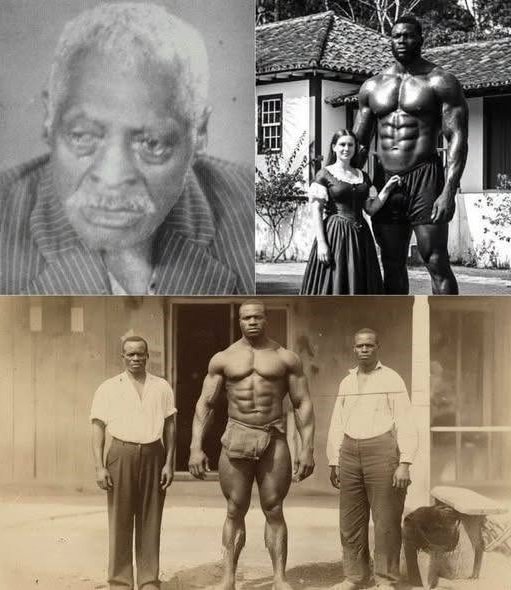
Pata Seca: The Enslaved Man Whose Body Became an Instrument of Exploitation — Part 3
Roque’s life after the purchase became bound to a purpose he had never chosen and could not escape. He was placed in a position that went beyond ordinary field labor. In the eyes of his owner, his value was no longer measured only by his physical productivity, but also by the children he was believed capable of fathering.
He was treated as a living investment in future generations.
Under slavery, even the most intimate parts of a person’s life could be controlled by those who claimed ownership over them. Personal freedom, family relationships, and the right to make decisions about one’s own future were systematically denied. Human beings were reduced to their economic usefulness, while their suffering was pushed aside in the pursuit of wealth.
Roque’s story illustrates the cruelty of a system in which a person’s body could be evaluated according to someone else’s financial ambitions. The belief that his physical proportions could predict the sex of his children had no established scientific foundation. Yet such ideas could serve the interests of people who profited from exploitation.
The tragedy was not simply that Roque was subjected to this treatment. It was that the system surrounding him made such treatment appear normal, practical, and profitable.
This is what makes stories like his so difficult to reduce to simple narratives of victims and oppressors. Systems of exploitation do not survive through individual cruelty alone. They are sustained through markets, laws, social customs, and shared assumptions that allow injustice to continue.
They survive when human beings are treated as property, when families are viewed as economic resources, and when profit becomes more important than dignity.
The story associated with Pata Seca reminds us that behind every historical statistic was a human life, with experiences and relationships that may never have been fully recorded. The surviving details may be incomplete, and some popular claims about Roque require careful historical verification, but the broader reality of slavery’s brutality is undeniable.
Roque José Florêncio was more than the nickname history attached to him. He was a human being whose identity was overshadowed by a system that attempted to define his entire existence through the interests of others.
His story leaves us with an uncomfortable question: how many forms of injustice have been justified throughout history simply because they were profitable to the people who benefited from them?