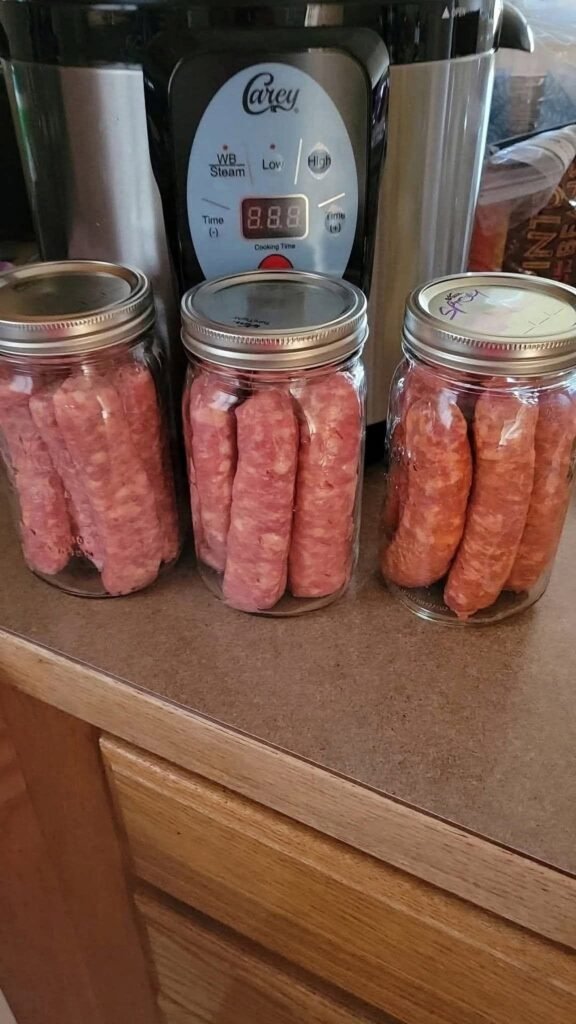
Step 4: Remove Air Bubbles and Apply the Lids
Use a suitable nonmetallic utensil to remove trapped air bubbles. Check the headspace and adjust it if necessary.
Wipe the jar rims with a clean, damp cloth or paper towel. Apply the lids and rings according to the manufacturer’s instructions.
Step 5: Process in a Pressure Canner
Place the filled jars in a pressure canner designed for home food preservation. Follow the manufacturer’s instructions for loading, venting, pressurizing, and operating the canner.
The National Center for Home Food Preservation lists the following processing times for the hot-pack method for ground or chopped meat, including cased sausage links:
- Pint jars: 75 minutes
- Quart jars: 90 minutes
The required pressure depends on the type of pressure canner and the elevation where you live. Consult the official processing tables to select the correct pressure before starting. Do not estimate pressure settings or substitute an untested appliance.
Step 6: Cool and Check the Jars
After processing, turn off the heat and allow the pressure canner to depressurize naturally according to the manufacturer’s instructions. Never force the canner to cool or attempt to open it while it is pressurized.
Remove the jars carefully and leave them undisturbed for 12–24 hours. Once cool, check the seals and follow official guidance for jars that fail to seal.
Essential Food Safety Tips
Safe homemade canned sausage links depend on following a tested procedure from start to finish.
- Never use a boiling-water bath to can sausage or other meat.
- Do not use an ordinary electric multicooker, slow cooker, or steam setting for shelf-stable meat canning.
- Do not improvise processing times, pressures, jar sizes, or ingredients.
- Follow the pressure-canner manufacturer’s instructions and the official processing table for your elevation.
- If you do not have suitable pressure-canning equipment, refrigerate or freeze the cooked sausage instead.
- Never taste food from a jar if you suspect spoilage or improper processing.
How to Store Homemade Canned Sausage
Jars processed using a tested method should be cooled, checked for proper seals, and stored according to official home-canning guidance. Keep the jars in a cool, dry place away from direct sunlight and excessive heat.
A sealed lid alone does not prove that meat has been processed safely. If the correct equipment or processing procedure was not used, do not treat the sausage as shelf-stable. Refrigerate or freeze it instead.
Frequently Asked Questions
Can I use a regular electric pressure cooker for canning sausage?
No. Do not assume an electric pressure cooker or multicooker can safely process meat for room-temperature storage. Use a pressure canner suitable for home canning and follow a tested procedure.
How long should sausage links be pressure canned?
The National Center for Home Food Preservation specifies 75 minutes for pint jars and 90 minutes for quart jars for its hot-pack procedure for ground or chopped meat, including cased sausage links. The required pressure varies with the canner type and elevation.
Can I add seasonings to sausage before canning?
Use seasonings appropriate to a tested sausage recipe. Avoid making untested changes that could affect the processing method or final product.
What should I do if a jar does not seal?
Follow official home-canning guidance for failed seals. Do not store an unsealed jar at room temperature. Refrigerate or freeze the contents promptly if they have been handled safely, or follow the official instructions for reprocessing where applicable.
Can I store these jars at room temperature?
Only when the sausage has been processed using a tested method with suitable equipment, the correct pressure and processing time, and properly sealed jars. A sealed lid by itself does not establish safety.
Final Thoughts
Homemade canned sausage links can be useful for convenient meals, but safe preservation requires more than filling jars and closing the lids. Choose fresh sausage, remove excess fat, follow the tested hot-pack procedure, and use an appropriate pressure canner.
If you do not have the right equipment, freezing or refrigerating the cooked sausage is the safer alternative. For the complete instructions and pressure tables, consult the National Center for Home Food Preservation’s official guide to Meat, Ground or Chopped.
Food Preservation Disclaimer
This article is for general culinary information. For shelf-stable meat canning, always follow the current tested instructions from a trusted food-preservation authority and the operating manual for your pressure canner. Do not rely on untested recipes or substitute cooking appliances for approved canning equipment.